
Diane Pretty v UK: The 2002 Right-to-Die Case Explained
Who was Diane Pretty?
Diane Pretty met her husband, Brian, on a coach trip to the seaside town of Clacton. She was 15. "It wasn't love at first sight but it was love by the end of the day," Brian told the BBC years later.
They married, had two children and settled in Luton, north of London. Bingo on Friday nights became their only night out. By 2002 they had been married for 25 years. They lived with their daughter and their granddaughter (European Court of Human Rights).
In November 1999, Diane was diagnosed with motor neurone disease (MND). MND slowly stops the nerves that control the muscles from working. It has no cure. Within four months she needed a wheelchair (BBC timeline). By the time her case reached Europe, she could not move from the neck down. She could not speak clearly, so she talked through a computer. But her mind was not affected. The court later described her intellect and her ability to make decisions as "unimpaired".
Diane was afraid of how her illness would end. She wanted to choose the time of her death, at home, with her family. She could not act alone. She wanted Brian to be allowed to help her. In England and Wales, that help is a crime.
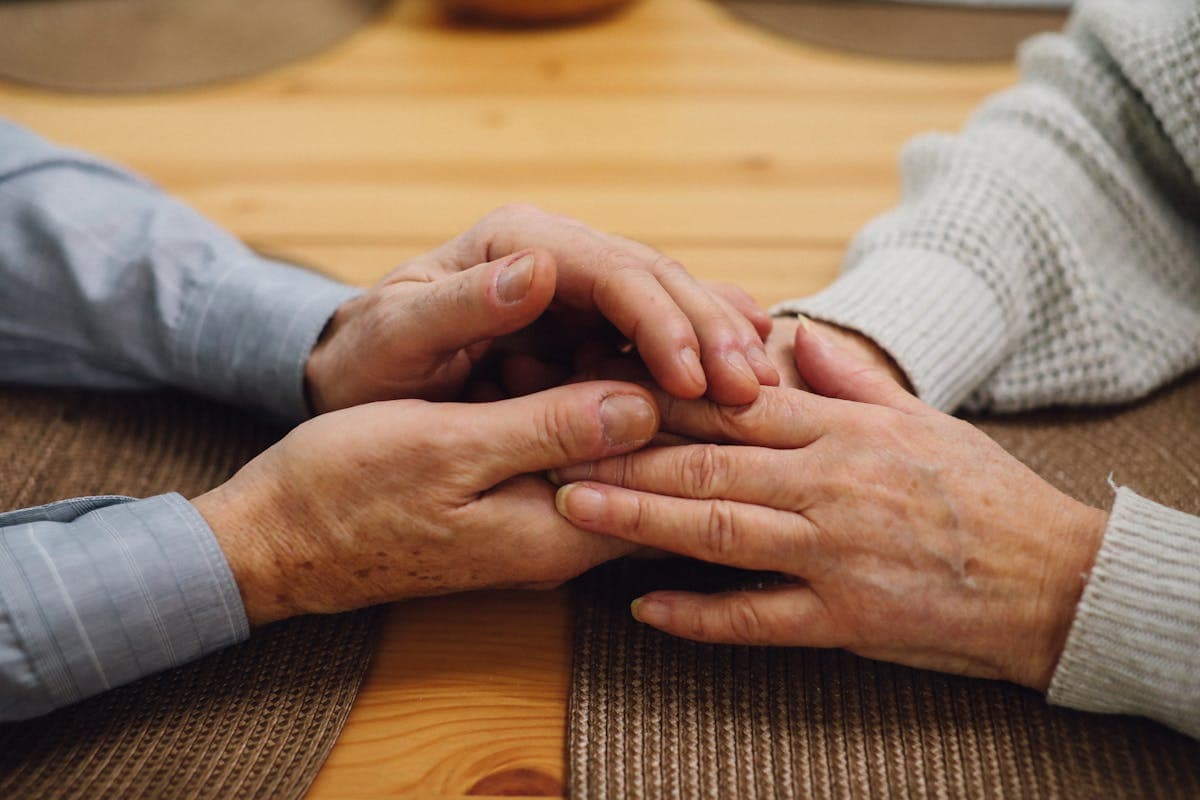
The couple kept their sense of humour. She told the BBC they could no longer hold hands or cuddle, "but we still have a laugh, still talk and still love each other."
Ask yourself: if your body failed but your mind stayed clear, who would you want to make choices about your care?
What did Diane Pretty ask the courts for?
She did not ask the courts to make assisted dying legal for everyone. She asked for something narrower: a promise.
In England and Wales, suicide stopped being a crime in 1961. But section 2 of the Suicide Act 1961 made it a crime to help another person end their life. The maximum sentence is 14 years in prison. Before anyone can be charged, the Director of Public Prosecutions (DPP), the head of the prosecution service in England and Wales, must agree.
On 27 July 2001, Diane's lawyer wrote to the DPP. She asked him to promise that Brian would not be prosecuted if he helped her. On 8 August 2001, the DPP said no. Directors, he wrote, do not grant immunity for future crimes, "no matter how exceptional the circumstances" (court record).
Brian told the BBC they would not break the law. "We shall fight in court and we will appeal if we lose because I want her to have her final wish," he said.
The case moved fast, because Diane did not have much time:
| Date | Court or event | Result |
|---|---|---|
| 8 Aug 2001 | DPP refuses to promise no prosecution | Case begins |
| Oct 2001 | High Court, 3 judges | Lost |
| 29 Nov 2001 | House of Lords, then the UK's highest court | Lost, 5 judges agreed |
| 19 Mar 2002 | Hearing in Strasbourg, France | Diane travels 12 hours by ambulance |
| 29 Apr 2002 | European Court of Human Rights | Lost, 7 judges agreed |
| 11 May 2002 | Diane Pretty dies, aged 43 | – |
Sources: BBC, European Court of Human Rights.
The trip to Strasbourg was the couple's first trip abroad together. "Our very first trip abroad is to come here to ask for Diane's right to die," Brian said at the time.
What did the European Court of Human Rights decide?
The European Convention on Human Rights is a treaty that protects basic rights in 46 European countries, including the UK. Diane's lawyers said the ban on help broke five of its articles (sections). On 29 April 2002, all seven judges ruled against her (Pretty v United Kingdom).
Here is the reasoning, in plain English:
- Article 2, the right to life. Her lawyers said this right includes the right to choose not to live. The court disagreed. It said "no right to die" can come from Article 2. A right to life cannot be turned into its opposite.
- Article 3, no inhuman or degrading treatment. The court accepted that she faced a distressing death. But her suffering came from her illness, not from anything the state did to her. Article 3 cannot force a state to approve "actions intended to terminate life".
- Article 8, respect for private life. This was the most important part. The court said it was "not prepared to exclude" that the ban interfered with her private life. In other words, how a person faces the end of life can be part of their private life.
- Article 9, freedom of belief, and Article 14, no discrimination. The court rejected both. On discrimination, it said the line between people who can and cannot act alone is often "very fine". A special exception for one group could weaken protection for everyone.
This idea echoes Lord Hope, one of the UK judges in the House of Lords. The court quoted his words in its judgment:
"The way she chooses to pass the closing moments of her life is part of the act of living" — Lord Hope, House of Lords, 29 November 2001
So why did she still lose? Because rights under Article 8 are not absolute. A state can limit them if this is "necessary in a democratic society". The court said the 1961 law protects "the weak and vulnerable". The court accepted that terminally ill people are not all the same. But many will be vulnerable. It added: "it is the vulnerability of the class which provides the rationale for the law". In other words, the law exists because the group as a whole is at risk.
Think of a speed limit outside a school. A very careful driver may be safe at a higher speed. But the limit is set for everyone, because the people it protects are vulnerable. The court said the UK could treat assisted suicide in a similar way.
The court also noted some flexibility: the DPP must agree to each prosecution, and judges can give lighter sentences.
After the ruling, Diane spoke at a news conference in London, through her computer (BBC):
"The law has taken all my rights away." — Diane Pretty, 29 April 2002
Brian said he was glad to have his wife "a little longer". But he was sad that her choice "has been taken away from her". Diane died twelve days later.
What changed after the Pretty case?
The law did not change. But the debate did. The Pretty case became a starting point for later right-to-die cases in Europe.
2009–2010: the Purdy case and the DPP policy. Debbie Purdy had multiple sclerosis. She wanted to know if her husband would be prosecuted for helping her travel abroad to die. On 30 July 2009, the House of Lords ruled that the rules on prosecution were not clear enough (summarised in Karsai v Hungary, paragraph 65). In February 2010, the DPP published a policy for prosecutors. It lists factors against prosecution, for example if the person made a "voluntary, clear, settled and informed decision" and the helper was "wholly motivated by compassion". It also lists factors for prosecution, such as pressure or a history of abuse.
The policy is like a weather forecast, not a promise. It tells you what is likely, not what will happen. From April 2009 to March 2026, police sent 209 assisted suicide cases to prosecutors. Only six ended in a successful prosecution (Crown Prosecution Service).
In 2011, Brian Pretty called Purdy's win "a step in the right direction". But he added: "The law hasn't changed though" (Dignity in Dying). Since 2006 he had been a patron of Dignity in Dying. This campaign group was called the Voluntary Euthanasia Society when it supported the couple (BBC).
2014: the Nicklinson case. Tony Nicklinson was paralysed after a stroke. He asked the courts to declare the ban incompatible with human rights. He died in 2012, and his wife, Jane, carried on the case. On 25 June 2014, the UK Supreme Court said no, by seven judges to two (UK Supreme Court). The majority said Parliament was in a better position to decide (Wikipedia). Read more in our Tony Nicklinson story.
2024: a Hungarian lawyer with the same disease. Dániel Karsai had once worked at the European Court of Human Rights. In 2022, he was diagnosed with ALS, another name for MND. He asked the same court for a right similar to the one Diane had asked for. On 13 June 2024, the court ruled against him by six votes to one (Dániel Karsai v Hungary). It cited Pretty and repeated that private life covers autonomy and dignity. But it said countries may still keep a ban, and that good palliative care is essential to a dignified end of life. Karsai died in September 2024 (Wikipedia).
2025–2026: Parliament. MPs passed the Terminally Ill Adults (End of Life) Bill in June 2025. It ran out of time in the House of Lords. A new version was rejected by MPs on 11 September 2026, by 286 votes to 270 (BBC). Read the full story in our guide to the UK assisted dying bill.
So, 24 years after Diane's case, the law is the same. Our section on euthanasia laws by country shows how the UK compares with other countries.
What do supporters and critics say about the case?
Many people spoke of Diane's courage. But they disagreed about what her case should teach us. Our section on the arguments for and against euthanasia looks at the evidence behind each view.
Supporters of a change in the law say Diane was a clear-minded adult who knew what she wanted. In 2001, Tamora Langley of the Voluntary Euthanasia Society argued that only Diane could judge her own quality of life (BBC). Supporters also see unfairness. A person who can act alone has a choice. A person who is paralysed must ask for help, and that help is a crime. In the 2026 debate, Liberal Democrat MP Tom Gordon said the current law "offers no safeguards and no protections for people in those final moments" (BBC).
Disability rights groups opposed her case. Rachel Hurst of Disability Awareness in Action said it would be "very wrong for justice to say in certain circumstances people can die". She feared "many people who did not want to die could be affected" (BBC). Today, Not Dead Yet UK, a disability rights group, says that assisted dying laws "will put disabled people at risk" (Not Dead Yet UK). In the 2026 debate, critics said the bill did too little to protect vulnerable people from being pressured into ending their lives (BBC).
Medical voices were divided. Dr Michael Wilks of the British Medical Association said in 2002 that the court "made the right decision" (BBC). The BMA has since moved to a neutral position, in 2021 (Wikipedia). Hospice doctor Richard Lamerton put the opposing view simply: "A right to die means someone has a duty to kill" (BBC). The Motor Neurone Disease Association said its own members were split (BBC).
Many religious leaders oppose a change. After the 2026 vote, Archbishop John Sherrington, who leads on life issues for the Catholic bishops of England and Wales, said the best answer to suffering is "greater access to excellent palliative and end-of-life care" (Catholic Register). Palliative care is care that controls pain and other symptoms when a cure is not possible. Learn more in our palliative care guide.
Which risk worries you more: a person suffering against their wishes, or a person pressured to die?
What does the Pretty case mean for families today?
Diane's choice was not legal in the UK, and it is still not legal today. But her story shows why families should talk early, before a crisis.
Many end-of-life wishes are legal and can be written down now. Our section on patient rights and end-of-life planning covers them in more detail:
- Refusing treatment is legal. In England and Wales, you can make an advance decision to refuse treatment. It can refuse treatments such as breathing machines (ventilation) or CPR. To refuse life-sustaining treatment, it must be written down, signed by you and a witness, and clearly say it applies even if your life is at risk. The NHS is clear: refusing treatment "is not the same as asking someone to end your life".
- Choose who speaks for you. A Lasting Power of Attorney for health and welfare lets you name people to make care decisions if you cannot. Registration costs £92, unless you get a reduction or exemption. See how to choose a healthcare proxy.
- Write down your values, not only treatments. What matters most to you? Where do you want to be cared for? Our guide to advance directives and living wills explains the options.
- Talk early. MND can take away speech. By the time her case reached Europe, Diane could only speak through a computer. Have the conversation while everyone can still take part. Start with our guide on how to talk to your family about end-of-life wishes.
Our guide to euthanasia, assisted suicide and MAID explains the terms. For other landmark stories, see our overview of famous euthanasia cases, including Sue Rodriguez in Canada.
Diane Pretty did not win her case. But she made many people think about a question that once felt too hard to ask. This week, you could ask one person you love a gentler version of it: "If I could not speak for myself, would you know what I want?"
If this topic brings up heavy feelings, you do not have to carry them alone. You can talk to someone today.
Sources
- hudoc.echr.coe.int/eng?i=001-60448
- en.wikipedia.org/wiki/Diane_Pretty
- en.wikipedia.org/wiki/Pretty_v_United_Kingdom
- news.bbc.co.uk/2/hi/health/1983781.stm
- news.bbc.co.uk/2/hi/health/1983562.stm
- news.bbc.co.uk/2/hi/health/1957396.stm
- news.bbc.co.uk/2/hi/health/1983941.stm
- news.bbc.co.uk/2/hi/health/1983592.stm
- news.bbc.co.uk/1/hi/health/1682321.stm
- news.bbc.co.uk/2/hi/uk/1518583.stm
- news.bbc.co.uk/1/hi/england/beds/bucks/herts/4637114.stm
- dignityindying.org.uk/news/brian-pretty-calls-change-law-assisted-dying-sooner-rather-later-9th-anniversary-diane-prettys-death
- cps.gov.uk/legal-guidance/suicide-policy-prosecutors-respect-cases-encouraging-or-assisting-suicide
- cps.gov.uk/publication/assisted-suicide
- en.wikipedia.org/wiki/Debbie_Purdy
- supremecourt.uk/cases/uksc-2013-0235
- en.wikipedia.org/wiki/R_(Nicklinson)_v_Ministry_of_Justice
- hudoc.echr.coe.int/eng?i=001-234151
- en.wikipedia.org/wiki/D%C3%A1niel_Karsai
- bbc.com/news/articles/c17j91jenr8o
- catholicregister.org/item/4383-life-advocates-welcome-defeat-of-assisted-suicide-bill-in-england-and-wales
- notdeadyetuk.org
- en.wikipedia.org/wiki/Assisted_suicide_in_the_United_Kingdom
- nhs.uk/conditions/end-of-life-care/planning-ahead/advance-decision-to-refuse-treatment
- gov.uk/power-of-attorney
Common questions
- Who was Diane Pretty?
- Diane Pretty was a mother with motor neurone disease who asked for a promise that her husband would not be prosecuted for helping her die. She was also a grandmother, and she and her husband, Brian, lived in Luton, England. Diagnosed with MND in November 1999, she lost every case in 2001 and 2002 and died on 11 May 2002, aged 43.
- What did the European Court of Human Rights decide in Pretty v United Kingdom?
- In Pretty v UK (2002), Europe's human rights court unanimously ruled that the right to life (Article 2) does not include a right to die. The seven judges ruled on 29 April 2002 and accepted that the ban on assisted suicide touched her right to private life under Article 8. But they decided the UK could keep the ban to protect people who are weak or vulnerable.
- Did the Pretty case change the law in the UK?
- No, the Pretty case did not change UK law: helping someone end their life is still a crime in England and Wales. The offence is in section 2 of the Suicide Act 1961, with a maximum of 14 years in prison, but the case started a long legal debate that led, after the Debbie Purdy case in 2009, to a 2010 prosecution policy explaining when charges are more or less likely. MPs rejected the most recent bill to change the law on 11 September 2026.
- Is there a right to die under the European Convention on Human Rights?
- No, the European Court of Human Rights said in Pretty that no right to die can come from the Convention's right to life (Article 2). It has followed this line since, including in Dániel Karsai v Hungary in June 2024. The court lets each country decide whether to allow assisted dying.
- What can families learn from the Pretty case today?
- The Pretty case teaches families to plan early and write their wishes down, using documents that UK law does allow. In England and Wales you can make an advance decision to refuse specific treatments and a Lasting Power of Attorney for health and welfare. These cannot ask anyone to end your life, which is illegal in the UK, but they make sure doctors and family know your wishes about treatment.