
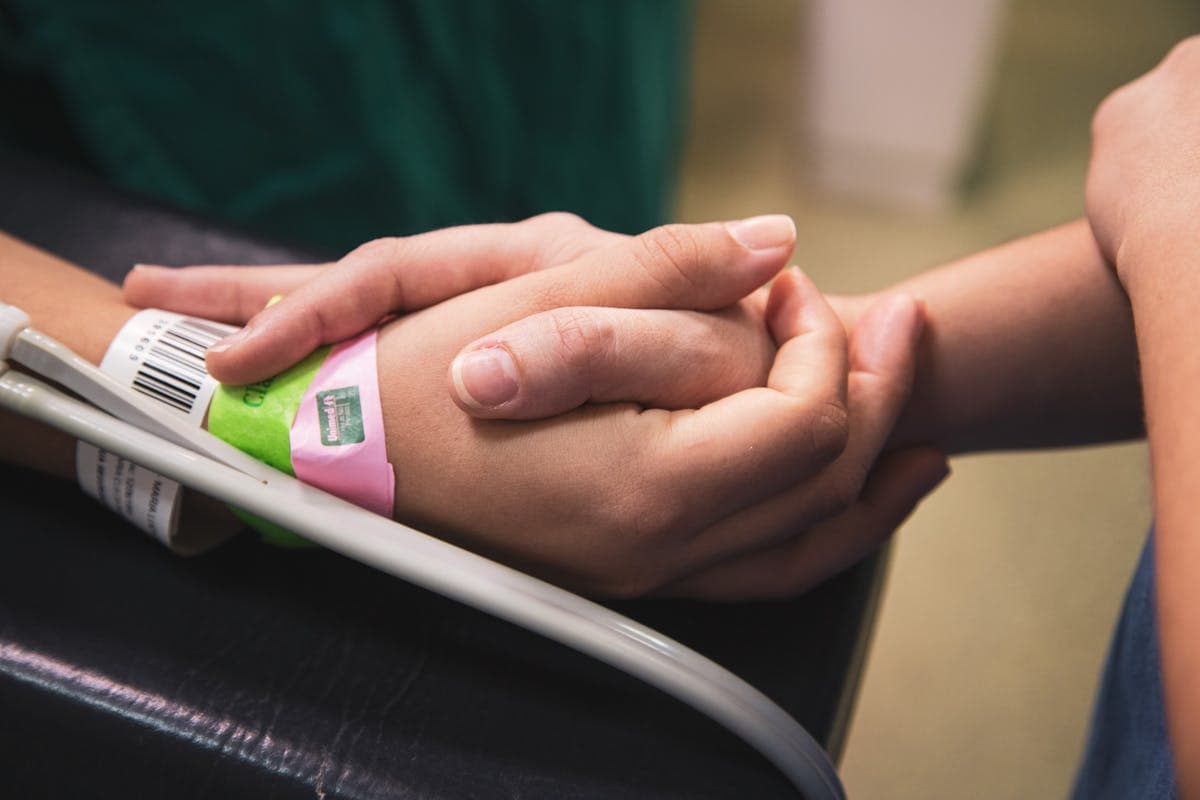
What happens when a doctor becomes the patient?
Henry Marsh spent decades as a brain surgeon in London. His memoir Do No Harm (2014) has been translated into 37 languages. Then, in his early seventies, he was told he had advanced prostate cancer (Wikipedia).
Suddenly he was on the other side of the desk. "I was panic-struck, pathetic, crying," he later said. In 2022 he told the British Medical Association's magazine:
"Being a patient is frightening and humiliating and demeaning…" — Henry Marsh, The Doctor (BMA), 2022
As a surgeon, he had kept his distance. "We have to be detached: we couldn't do the work if we didn't," he explained. Illness took that distance away. Marsh supports a change in the law on assisted dying. He is a patron of My Death, My Decision, a group that campaigns for it in England and Wales. By August 2022 his cancer was in remission.
His story has a second half. In 2023 Marsh co-founded a charity, Hospice Ukraine, with Dr Rachel Clarke. Clarke is a palliative care doctor. Palliative care is care that eases pain and distress when a cure is not possible.
Clarke sees assisted dying differently. She writes that it is "a medical treatment I do not oppose on principle". But she wants it to be a true last resort. She calls it "a national disgrace" that charity pays for two thirds of hospice care in Britain (New Statesman, 2024).
So here are two doctors. They work together, they care for dying people, and they weigh the law in different ways. That is medicine's view of euthanasia in one picture.
This page explains what doctors and nurses think. It covers what they do where assisted dying is legal, and what the research shows. It does not tell you what to believe.
Two terms first. In euthanasia, a doctor (or, in Canada, a nurse practitioner) ends a person's life at that person's clear request. In assisted dying (also called assisted suicide or medical aid in dying), a doctor prescribes medicine that the person takes themselves. Our types of euthanasia page explains more terms.
Do most doctors support euthanasia or assisted dying?
There is no single answer. It depends on the country, the doctor's specialty and the exact question.
The biggest survey comes from the UK. In 2020 the British Medical Association (BMA) asked its members. Almost 29,000 doctors (28,986) replied (BMA survey).
| Question (UK doctors, 2020) | Support | Oppose | Unsure |
|---|---|---|---|
| Doctors prescribe drugs for patients to take themselves | 50% | 39% | 11% |
| Doctors give the drugs themselves (euthanasia) | 37% | 46% | 17% |
| "I would take part" in prescribing | 36% | 45% | 19% |
| "I would take part" in euthanasia | 26% | 54% | 20% |
Notice the gap. Many doctors accept the idea for others but would not do it themselves. The doctor's role matters to them, not only the law.
Specialty matters too. Doctors in anaesthetics, emergency medicine and intensive care were more supportive. Doctors in palliative care, general practice, geriatric medicine (care of older people) and clinical oncology (cancer care) were more opposed. The doctors who sit with dying people every day are often the most cautious.
A major 2016 review in JAMA by Ezekiel Emanuel and colleagues looked across countries (JAMA, 2016). It found that:
- In the US, fewer than 20% of doctors had ever received a request. Only 5% or fewer had agreed.
- In Oregon and Washington, fewer than 1% of licensed doctors write a prescription each year.
- In the Netherlands and Belgium, about half or more of doctors had received a request. About 60% of Dutch doctors had granted one at some point.
So where it is legal, a small group of doctors does most of the work. In Oregon in 2025, 155 doctors wrote 637 prescriptions. Most of them (71%) wrote only one or two. One doctor wrote 101 (Oregon Health Authority, 2025).
Evidence: strong that doctors are divided. The surveys are large and the pattern repeats across countries.
What does the Hippocratic Oath say about euthanasia?
The Hippocratic Oath is about 2,400 years old. It is the most famous promise in medicine. The US National Library of Medicine translates one line like this:
"I will not give a lethal drug to anyone if I am asked, nor will I advise such a plan." — Hippocratic Oath, translated by Michael North, US National Library of Medicine
For many opponents, that line settles the matter. Doctors have promised for centuries not to end life.
But there are two problems. First, very few doctors swear the original oath today. Most use modern versions. Second, the famous phrase "first, do no harm" is not in the oath at all, as the National Library of Medicine points out.
A widely used modern oath is the World Medical Association's Declaration of Geneva (last updated 2017). It does not mention euthanasia. It contains two promises that pull in different directions (WMA):
- "I will maintain the utmost respect for human life."
- "I will respect the autonomy and dignity of my patient." (Autonomy means a person's right to make their own choices.)
Opponents point to the first line. Supporters point to the second. It is like two people reading the same map and choosing different roads.
Nearly all doctors agree on one thing. Stopping treatment that a patient does not want is ethical, even if the patient then dies. The WMA says a doctor who respects a patient's refusal of treatment "does not act unethically", even when death follows (WMA, 2019).
So the real split is about actively ending a life. In 1975 the philosopher James Rachels challenged even that line. In the New England Journal of Medicine, he argued that the difference between "killing" and "letting die" has no moral importance in itself (Rachels, NEJM 1975). Many doctors still disagree. For them, what the doctor intends and does is what matters.
A question for you: is turning off a machine that keeps someone alive different from giving them medicine to end their life? Why, or why not?
What do medical associations say in 2026?
Medical groups disagree, and some have changed their view over time.
| Organisation | Position | Key detail |
|---|---|---|
| World Medical Association (WMA) | Opposed | "Firmly opposed" (2019). No doctor should be forced to take part or to refer. |
| American Medical Association (AMA) | Opposed | Calls it "fundamentally incompatible with the physician's role as healer". |
| British Medical Association (BMA) | Neutral since 2021 | Wants an opt-in system. Doctors may decline "for any reason". |
| Royal College of Physicians (UK) | Neutral on the principle | In May 2025 it said the England and Wales bill had "concerning deficiencies". |
| Royal College of Psychiatrists (UK) | Could not support the bill | Warned of risks for people with treatable mental illness (2025). |
| Canadian Medical Association | Balanced | Supports doctors' right to follow their conscience (2017). |
| Royal Dutch Medical Association (KNMG) | Accepts it within the law | Calls it an "exceptional medical procedure", not normal care. |
| American Academy of Hospice and Palliative Medicine | "Studied neutrality" | Worried about making it routine medical practice. |
| International Association for Hospice and Palliative Care | Opposed until care is in place | No country should legalise until everyone can get palliative care. |
| American Nurses Association | Neutral on the law | Nurses must not give the medication themselves. |
Sources: WMA, AMA, BMA, RCP, RCPsych, CMA, KNMG, AAHPM, IAHPC, ANA.
The long trend is from opposition toward neutrality. The BMA used to oppose a change in the law. In September 2021 its policy conference voted to become neutral. Neutral does not mean silent. In 2026 the BMA set new policy: doctors who take part should have special training, national accreditation and a place on a dedicated register. Resident (trainee) doctors should not be formally involved.
Many groups say nothing at all. A 2020 review found that only 12 of 150 US medical and surgical societies (8%) had a public statement on assisted suicide or euthanasia. Of those that did, most were opposed and the rest chose "studied neutrality" (Barsness et al., 2020).
These positions shape real laws. In England and Wales, MPs passed the Terminally Ill Adults (End of Life) Bill in June 2025 by 314 votes to 291. It ran out of time in the House of Lords in April 2026. It was brought back in June 2026. On 11 September 2026, MPs rejected it at its second reading (the first main vote) by 286 to 270 (Wikipedia). Both Royal Colleges had published their concerns while the bill was being debated. For other countries, see our legal landscape page.
What does a doctor do where assisted dying is legal?
Where it is legal, doctors act as gatekeepers. A gatekeeper decides who may pass. Each law differs, but the steps are similar. None of them is quick or automatic.
- The request. The patient asks, usually in person first. The request must come from the patient, not from family or carers.
- The first assessment. A doctor checks the diagnosis and the legal conditions. They check that the person has mental capacity (can understand, weigh and decide), and that no one is pushing them. They must explain other options, including palliative care.
- The second opinion. A second, independent doctor checks again. If either doctor has doubts about mental health, they can ask a specialist.
- Time to reflect. Oregon requires 15 days between two spoken requests. Since 2020, patients expected to live fewer than 15 days can be exempted; 30% were in 2025. Canada has no fixed wait when death is reasonably foreseeable ("Track 1"), but at least 90 days of assessment when it is not ("Track 2"). The Netherlands has no fixed waiting period. Belgium requires at least one month between the written request and euthanasia when the person is not expected to die soon.
- Reporting. Every case must be reported to an oversight body, which checks that the law was followed.
Sources: Oregon Health Authority, Justice Canada, Library of Parliament, Canada.
How well does oversight work? In the Netherlands, review committees received 10,341 reports in 2025. They found 7 cases that did not meet the legal "due care" rules (RTE, 2025). In Oregon, no doctor was referred to the state medical board in 2025 for breaking the reporting rules. Supporters say this shows the rules work. Critics say the system mostly relies on doctors reporting on themselves.
How did courts shape the doctor's role?
Judges, not only doctors, drew many of these lines. In Carter v Canada (2015), Canada's Supreme Court ruled unanimously that a total ban on a doctor's help to die broke the constitution. The ruling covered "a competent adult person who clearly consents" and has a "grievous and irremediable medical condition" causing suffering "intolerable to the individual" (Wikipedia). The court did not order any doctor to take part. Parliament then wrote the law in 2016.
In the US, Gonzales v Oregon (2006) asked a different question. Could the federal government punish Oregon doctors who followed their state's law? In 2001 the US Attorney General had said such doctors could face prosecution under federal drug law. The Supreme Court disagreed by 6 votes to 3. Federal drug law did not let the Attorney General override a state's rules on medical practice (Wikipedia).
Courts also judged doctors who acted outside any law. In Michigan, Jack Kevorkian was acquitted three times. In 1999 he was convicted of second-degree murder, after he ended a patient's life himself.
Both rulings put doctors at the centre. The law trusts them to judge who qualifies. That is why their opinions, and their limits, matter so much.
Why is "six months to live" so hard to judge?
Many laws, including Oregon's, require a terminal illness with about six months or less to live. But predicting time is hard, even for experts.
In a famous Chicago study, 343 doctors estimated survival for 468 patients entering hospice. Only 20% of estimates were accurate. Doctors were too hopeful 63% of the time. On average they overestimated survival by a factor of 5.3 (Christakis and Lamont, 2000).
The error can go the other way too. In Oregon in 2025, 24 people (6% of deaths under the law) lived more than six months after getting their prescription. The UK's Royal College of Physicians said this "prognostic uncertainty" must be "understood and accepted" by patients and by everyone involved in decisions.
Think of a weather forecast. It is useful, but no one would bet their life on the exact day the rain stops. A prognosis is a forecast, not a fact.
How well does the doctor know the patient?
In Oregon in 2025, the typical patient had known the prescribing doctor for just 4 weeks. Across 1998 to 2023 it was 9 weeks. In a study of Dutch psychiatric cases, 27% of patients got euthanasia from a doctor who was new to them (Kim et al., 2016).
Supporters say this is often because the patient's own doctor objects, so a willing specialist steps in. Critics worry that a doctor who has known you for weeks may miss things that a long-time doctor would notice.
Can doctors refuse to take part?
Yes. Almost every law lets doctors and nurses say no. The WMA says no doctor should be forced to take part (WMA). The Canadian Medical Association supports every doctor's right to "follow their conscience" (CMA, 2017). The Dutch KNMG says "a physician is never obliged to perform euthanasia". It adds that the patient is not "entitled" to it either (KNMG, 2021).
The hard question is referral. If a doctor refuses, must they send the patient to someone who will help?
Picture a pharmacist who will not sell a product, but tells you which shop down the road sells it. Some people see this as fair to everyone. Others say the pharmacist is still helping, just one step removed.
The answers differ by place:
- Ontario, Canada: Doctors who object must make an "effective referral" to a willing, available doctor or agency. In 2019 the Ontario Court of Appeal agreed this limited doctors' religious freedom. But it ruled the limit was justified, to protect patients' access to care, especially vulnerable patients (2019 ONCA 393).
- The WMA: No doctor should be obliged "to make referral decisions to this end".
- The Netherlands: The KNMG says a doctor who objects has "no legal duty to refer". But they have a "moral and professional responsibility" to help the patient find a willing colleague in good time (KNMG, 2021).
- The BMA: Wants an opt-in system, where only doctors who choose to join can take part. It wants a right to decline "for any reason", not only for reasons of conscience. It also says doctors should have no duty to raise assisted dying with patients (BMA).
There is a cost either way. The Ontario court accepted that without referral, some patients, "particularly more vulnerable patients", would lose fair access to care. A person in a rural area might find no willing doctor nearby. On the other side, forcing doctors to act against deep beliefs could push some out of medicine.
Can palliative care relieve all suffering?
This is perhaps the most important medical question in the whole debate.
Modern palliative care began with Dame Cicely Saunders (1918–2005), a nurse, social worker and then doctor. In 1967 she opened St Christopher's Hospice in London, the world's first purpose-built modern hospice. She taught that dying people feel "total pain": physical, emotional, social and spiritual. Her best-known words are:
"You matter because you are you. And you matter until the end of your life." — Cicely Saunders, quoted by Hospice UK
Saunders firmly opposed euthanasia, partly because of her Christian faith. She argued it was never needed, because effective pain control is always possible. Yet she also said both sides were against needless pain and the loss of dignity (Wikipedia). Her view still shapes palliative care today.
What the research shows palliative care can do
- Early palliative care helps. In a landmark 2010 trial, 151 people with advanced lung cancer were split into two groups. One group also saw palliative care specialists from the start. That group had a better quality of life, and fewer had depression symptoms (16% vs 38%). Fewer got aggressive treatment at the end of life (33% vs 54%). And they lived longer: a median of 11.6 months vs 8.9 months (Temel et al., NEJM 2010). Evidence: strong, but from one trial in one type of cancer.
- Hospitals often fail dying patients. The SUPPORT study (1995) followed 9,105 seriously ill adults in five US teaching hospitals. For half of conscious patients who died in hospital, families said they had moderate to severe pain at least half the time. A large effort to improve communication did not change these results (SUPPORT, JAMA 1995). Good intentions are not enough; health systems must change.
- Most people cannot get it. The World Health Organization says only about 14% of people who need palliative care worldwide receive it (WHO).
- Better care changes some minds. In a 1999 survey of Oregon doctors, 46% of patients changed their minds about assisted suicide after the doctor improved their care. When nothing changed, only 15% did (Ganzini et al., NEJM 2000). Evidence: mixed. It relies on doctors' memories, and it is old.
What palliative care cannot always do
Most people who use assisted dying laws already have palliative care. In Oregon in 2025, 92% were in hospice care. In Canada in 2024, 74% had received palliative care. Only 2.5% needed palliative care but did not receive it, and 91% of that small group said it was available to them (Health Canada, 2024).
So for many, it is not a lack of care. Palliative care can ease pain. It cannot always give back independence, dignity or the things that made life feel like theirs.
Does strong pain relief speed up death?
Many people fear that strong pain medicine at the end shortens life. This fear can lead to pain that is not treated well.
The research is reassuring. A 2003 review from St Christopher's Hospice found no evidence that starting or increasing opioids or sedatives, when used properly, brings death sooner (Sykes and Thorns, 2003). A 2012 review of 1,807 patients found that palliative sedation (medicine to ease severe symptoms by lowering awareness) was not linked to shorter survival (Maltoni et al., 2012). Evidence: mixed but consistent. There are no randomised trials, but study after study points the same way.
This matters for the doctrine of double effect. That old principle says an act with a good aim (easing pain) can be right even if it has a bad side effect it does not aim at. The research suggests the bad side effect is rarer than people think. Proper pain relief is not euthanasia.
Can the two work side by side?
The surgeon and writer Atul Gawande supports laws that let dying people ask for a prescription. Yet in Being Mortal (2014) he called the high Dutch rate a sign that something else had failed. He wrote:
"Our ultimate goal, after all, is not a good death but a good life to the very end." — Atul Gawande, Being Mortal, p. 245 (book review, CBHD)
The International Association for Hospice and Palliative Care goes further. It says no country should legalise euthanasia until everyone can get palliative care and medicines like opioids (IAHPC, 2017).
Others have tried to combine the two. A large home palliative care team in Toronto offered assisted dying in its first year of Canada's law. Of its patients, 1.2% received it. The team kept giving palliative care throughout, and its process made room for staff who object (Wales et al., 2018). The same paper notes that most palliative care doctors in Canada object to assisted dying.
For more, read our full palliative care guide.
Why do some patients ask their doctor for help to die?
Many people assume pain is the main reason. The evidence says otherwise. The 2016 JAMA review found that "pain is mostly not reported as the primary motivation". More than 70% of patients had cancer. Most were older, white and well-educated (JAMA, 2016).
In Oregon in 2025, doctors reported these end-of-life concerns (Oregon Health Authority):
| Concern (Oregon, 2025) | Share of patients |
|---|---|
| Losing autonomy (control over their own life) | 89% |
| Less able to enjoy activities | 89% |
| Loss of dignity | 65% |
| Losing control of bodily functions | 53% |
| Being a burden on family or carers | 40% |
| Pain, or worry about pain | 37% |
| Cost of treatment | 6% |
Canada shows a similar picture. In 2024, the most common source of suffering was losing the ability to do meaningful activities (95% in Track 1). Isolation or loneliness was reported for 22% of Track 1 patients, and for 45% of Track 2 patients, whose death was not foreseeable (Health Canada).
Supporters say these figures show people choose for their own reasons, not because of untreated pain. Critics say that being a burden and loneliness are social problems. Medicine should not answer them with death.
The role of hopelessness
In a well-known 2000 study, 92 people with terminal cancer in a New York palliative care hospital were interviewed. About 17% had a high desire for a hastened (faster) death. Depression and hopelessness were the strongest predictors, each on its own (Breitbart et al., JAMA 2000). Evidence: strong for the link, but the study cannot prove cause and effect.
Can care reduce that hopelessness? Harvey Chochinov developed dignity therapy: a short talk therapy in which dying people record what matters most to them, as a document for their family. In a trial of 441 patients, it did not reduce distress, depression or the desire for death. But patients said it helped, improved their quality of life, raised their sense of dignity and helped their families. They also reported less sadness or depression than with standard palliative care (Chochinov et al., Lancet Oncology 2011). Evidence: mixed.
A question for you: if you were very ill, what would matter most to you — less pain, more time, staying in control, or not being a burden?
How do doctors check for depression?
A wish to die is not always a settled decision. It can be a symptom of depression, and depression can be treated. Telling the two apart is one of the hardest jobs in medicine.
If you are having thoughts of ending your life, please talk to someone today. Our help page lists free support.
Here is what research shows about how well doctors do this:
- Some cases are missed. A 2008 Oregon study interviewed 58 people who asked for aid in dying. Of the 18 who got a prescription, 3 met the criteria for depression. The authors warned the law "may fail to protect some patients whose choices are influenced by depression" (Ganzini et al., BMJ 2008).
- Specialist checks are rare. In Oregon, only 2 people were referred for a psychiatric or psychological evaluation in 2025. Since 1998, the figure is 83 out of 3,691 people who have died under the law (2.9%) (Oregon Health Authority).
- Some screening does happen. In the 1999 Oregon doctor survey, 20% of patients who asked had symptoms of depression. None of them received a prescription (Ganzini et al., 2000).
UK specialists have raised the same worry. The Royal College of Physicians said standard capacity tests are limited at spotting "remediable suicidal risk factors" — causes of a wish to die that could be treated. The Royal College of Psychiatrists warned that the England and Wales bill "risks preventable deaths of people with treatable mental illness" (RCPsych, 2025).
Supporters reply that every doctor must judge mental capacity, and that most people who ask are not depressed. Both sides agree on one point: a person's distress deserves care and attention first.
Should mental illness alone qualify?
This is where doctors disagree most, even those who support assisted dying for terminal illness.
The Netherlands and Belgium allow euthanasia for psychiatric suffering alone, under strict rules. In the Netherlands, there were 174 such cases in 2025, down from 219 in 2024. In 2021 there were 115 (RTE). In Belgium, psychiatric disorders made up 6.3% of the 1,117 non-terminal cases in 2025, or about 70 people (Belga).
Two studies are central to this debate:
- Netherlands (Kim et al., JAMA Psychiatry 2016). Researchers reviewed 66 cases from 2011 to 2014. 70% were women. Most had long, severe illness, and most were described as socially isolated or lonely. In 11% of cases there was no independent psychiatric input. In 24%, the consulting doctors disagreed. The review committees found only one case that broke the due care rules. They generally accepted the doctors' judgment (Kim et al.).
- Belgium (Thienpont et al., BMJ Open 2015). This study followed 100 psychiatric patients who asked. 48 requests were accepted and 35 were carried out. Of the others who were accepted, 8 postponed or cancelled because "simply having this option gave them enough peace of mind to continue living". Six of the 100 died by suicide (Thienpont et al.).
People read these findings in different ways. Supporters see relief and careful review. Critics see how hard it is to predict whether a mental illness will ever improve.
Canada has gone back and forth. Its law excludes people whose only condition is a mental illness until 17 March 2027 (Justice Canada). On 7 October 2026, Justice Minister Sean Fraser announced an indefinite pause, saying:
"When it comes to mental illness, serious concerns remain about whether MAID requests can be assessed safely and consistently." — Sean Fraser, reported by The Catholic Register, 2026
The government plans a bill this autumn, which must pass before 17 March 2027. The same bill is expected to allow advance requests for adults with an early diagnosis of an incurable illness. A separate private member's bill from Conservative MP Tamara Jansen, C-218, aimed to block the change for good. It was defeated by 187 votes to 141. Our explainer covers why Canada kept MAID closed to mental illness alone.
The disability rights critique
Disability groups raise a deeper worry. In 2021, three UN human rights experts wrote to Canada about its expanded law. They warned it might discriminate "by singling out the suffering associated with disability as being of a different quality and kind than any other suffering" (Inclusion BC).
In the US, the group Not Dead Yet has opposed assisted suicide since 1996. It says the laws rest on "a harmful idea", that "it is better to be dead than disabled" (Not Dead Yet). Its founder, Diane Coleman, argued that disabled people are often offered help to die before they are offered real help to live (Wikipedia).
Supporters reply that people with severe, lasting suffering should not be shut out of a choice just because their illness is not terminal. This is one of the hardest questions in the debate, and there is no medical test that can settle it.
What role do nurses play?
Nurses usually spend the most time with dying patients. They often hear a wish to die first. They care for the patient before, stay with families, and support them after.
In the US, the American Nurses Association updated its position in 2019. It "does not support or oppose" current laws. Nurses are "still ethically prohibited from administering aid-in-dying medication". But they should "remain objective" when patients explore this option, and they keep the right to object (ANA, 2019).
Canada is different. There, nurse practitioners (nurses with advanced training) can assess patients and provide medical assistance in dying themselves. In 2024 they made up 6.8% of the 2,266 clinicians who provided it (Health Canada). In the Netherlands and Belgium, the law gives this role to doctors only.
Nurses often feel moral distress: knowing what they believe is right but feeling unable to act on it. This can happen when a patient suffers without the option they want. It can also happen when a nurse is asked to support a death they find wrong.
How does this work affect doctors and nurses?
Assisted dying is not only a patient's experience. It also leaves a mark on the people who say yes, and on those who say no.
A 2016 survey of 1,374 Dutch doctors explored this (Evenblij et al., 2019). It found that:
- Doctors who granted and doctors who refused both often reported an emotional burden.
- Doctors who refused felt the most pressure, especially when the patient was 80 or older, had six months or more to live, and did not have cancer.
- A large majority of doctors had "contradictory emotions" after performing euthanasia: relief and sadness, peace and doubt, together.
What do doctors want for themselves? In a 2014 US study of 1,081 doctors, 88.3% said they would choose a do-not-resuscitate order for themselves (Periyakoil et al., 2014). A do-not-resuscitate order means no CPR if the heart stops. The authors asked why doctors keep giving dying patients intensive care that they would refuse for themselves.
That gap echoes Henry Marsh. Doctors who see the end of life up close often want less treatment, more comfort and more control for themselves.
What can Henry Marsh's story teach us?
Henry Marsh spent his working life deciding about other people's brains. Then a scan put him on the other side of the desk. Being a patient changed how he saw doctors. In 2022 he said:
"Much to my surprise, I now feel a more complete human being." — Henry Marsh, The Doctor (BMA), 2022
He came to support assisted dying. His co-founder Rachel Clarke came to a more cautious view. She does not oppose it in principle, but she wants hospice care properly funded first. They still built a hospice charity together.
That is what this page has tried to show. Medicine does not speak with one voice on euthanasia. The research gives some clear answers:
- Doctors are divided, and the doctors closest to dying people are often the most cautious.
- Early palliative care improves life for many, but it cannot remove every kind of suffering.
- Most requests come from loss of control and dignity, not from pain alone.
- Depression and hopelessness are real risks, and specialist checks are rare.
- Prognosis is a forecast, not a fact.
On the deepest questions, evidence stops and values begin.
Questions for you to think about:
- What do you most want from a doctor if a cure is no longer possible?
- Should a doctor who objects have to refer you to someone who will help?
- Is it the doctor's job to heal, to relieve suffering, or both? And what if those two goals clash?
To keep exploring, read about ethics and philosophy, the arguments for and against, and palliative care.
Sources
- Henry Marsh (neurosurgeon) - Wikipedia
- In all honesty: Henry Marsh interview - The Doctor (BMA), 2022
- Rachel Clarke: We need to talk about dying - New Statesman, 2024
- BMA physician-assisted dying survey, 2020
- BMA position on physician-assisted dying
- Emanuel et al. Attitudes and practices of euthanasia and physician-assisted suicide. JAMA, 2016
- Greek Medicine and the Hippocratic Oath - US National Library of Medicine
- WMA Declaration of Geneva
- WMA Declaration on Euthanasia and Physician-Assisted Suicide, 2019
- Rachels J. Active and passive euthanasia. NEJM, 1975
- AMA Code of Medical Ethics Opinion 5.7: Physician-assisted suicide
- RCP: 'Deficiencies in protecting patients and professionals' - position on the Terminally Ill Adults (End of Life) Bill, May 2025
- RCPsych: Assisted dying bill risks preventable deaths of people with treatable mental illness, June 2025
- Canadian Medical Association policy: Medical assistance in dying, 2017
- KNMG Guideline End-of-Life Decisions, 2021
- AAHPM statement on physician-assisted dying
- IAHPC position statement: Euthanasia and physician-assisted suicide. J Palliat Med, 2017
- Barsness et al. US medical and surgical society position statements on PAS and euthanasia. BMC Med Ethics, 2020
- American Nurses Association: new medical aid in dying position, 2019
- Terminally Ill Adults (End of Life) Bill - Wikipedia
- Oregon Death with Dignity Act 2025 Data Summary - Oregon Health Authority
- Health Canada: Sixth Annual Report on Medical Assistance in Dying, 2024
- Department of Justice Canada: Canada's medical assistance in dying (MAID) law
- Library of Parliament (Canada): Medical assistance in dying - the law in selected jurisdictions
- Carter v Canada (AG), 2015 SCC 5 - Wikipedia
- Gonzales v Oregon, 546 US 243 (2006) - Wikipedia
- Regional Euthanasia Review Committees (RTE): core figures 2025
- RTE: euthanasia for psychiatric conditions 2021-2025
- Belga: Belgian Federal Euthanasia Commission figures for 2024-2025
- Christakis and Lamont. Extent and determinants of error in physicians' prognoses. BMJ/West J Med, 2000
- Christian Medical and Dental Society of Canada v CPSO, 2019 ONCA 393
- Hospice UK: You matter because you are you - the story of modern hospice care
- Cicely Saunders - Wikipedia
- WHO fact sheet: Palliative care
- Temel et al. Early palliative care for metastatic non-small-cell lung cancer. NEJM, 2010
- SUPPORT Principal Investigators. A controlled trial to improve care for seriously ill hospitalized patients. JAMA, 1995
- Ganzini et al. Physicians' experiences with the Oregon Death with Dignity Act. NEJM, 2000
- Sykes and Thorns. The use of opioids and sedatives at the end of life. Lancet Oncol, 2003
- Maltoni et al. Palliative sedation in end-of-life care and survival: a systematic review. J Clin Oncol, 2012
- Review of Atul Gawande, Being Mortal (2014) - CBHD
- Wales et al. Providing MAiD within a home palliative care program in Toronto. J Palliat Med, 2018
- Breitbart et al. Depression, hopelessness, and desire for hastened death. JAMA, 2000
- Chochinov et al. Effect of dignity therapy on distress and end-of-life experience. Lancet Oncol, 2011
- Ganzini et al. Prevalence of depression and anxiety in patients requesting physicians' aid in dying. BMJ, 2008
- Kim, De Vries and Peteet. Euthanasia and assisted suicide of patients with psychiatric disorders in the Netherlands 2011-2014. JAMA Psychiatry, 2016
- Thienpont et al. Euthanasia requests for 100 Belgian patients with psychiatric disorders. BMJ Open, 2015
- Catholic Register: Government to indefinitely pause MAiD for mental illness, October 2026
- Inclusion BC: UN experts challenge Canada over Bill C-7, 2021
- Not Dead Yet
- Diane Coleman - Wikipedia
- Evenblij et al. Physicians' experiences with euthanasia. BMC Fam Pract, 2019
- Periyakoil et al. Do unto others: doctors' personal end-of-life resuscitation preferences. PLoS One, 2014
Frequently Asked Questions
Does the Hippocratic Oath forbid euthanasia?
What do medical associations say about euthanasia in 2026?
Do most doctors support assisted dying?
Can a doctor refuse to take part in assisted dying?
Can good palliative care remove the wish to die?
Do doctors check for depression before assisted dying?
Can people with mental illness alone get assisted dying?
What role do nurses play in euthanasia?
Related Topics
Palliative Care vs Euthanasia: Hospice, Pain Relief and Support
Palliative care vs euthanasia: hospice and comfort care ease pain and do not end life. What each one is, what research shows, and how they fit together.
Section 04Euthanasia Ethics: The Key Arguments, Evidence and Thinkers
The ethics of euthanasia in plain English: autonomy, sanctity of life, killing vs letting die, double effect, slippery slope evidence, religion and law.
Section 02Types of Euthanasia: Active vs Passive, Voluntary and MAID
Euthanasia means a doctor ends a life on request to relieve suffering. The types explained: active vs passive, voluntary, assisted suicide and MAID.
Read next
- What Is Palliative Care? A Complete Guide for FamiliesPalliative care is not giving up. It eases pain and fear at any stage of serious illness, alongside treatment. Who qualifies, how it differs from hospice.
- 5 Signs It's Time for Hospice Care (and Why Families Wait)Jimmy Carter had almost two years of hospice. Half of families get 19 days or less. Five signs it is time, what hospice costs, and how to ask a doctor.
- Euthanasia vs Assisted Suicide vs MAID: The One Real DifferenceEuthanasia, assisted suicide and MAID are not the same. One question tells them apart: whose hand takes the final step? Plus where each is legal in 2026.