
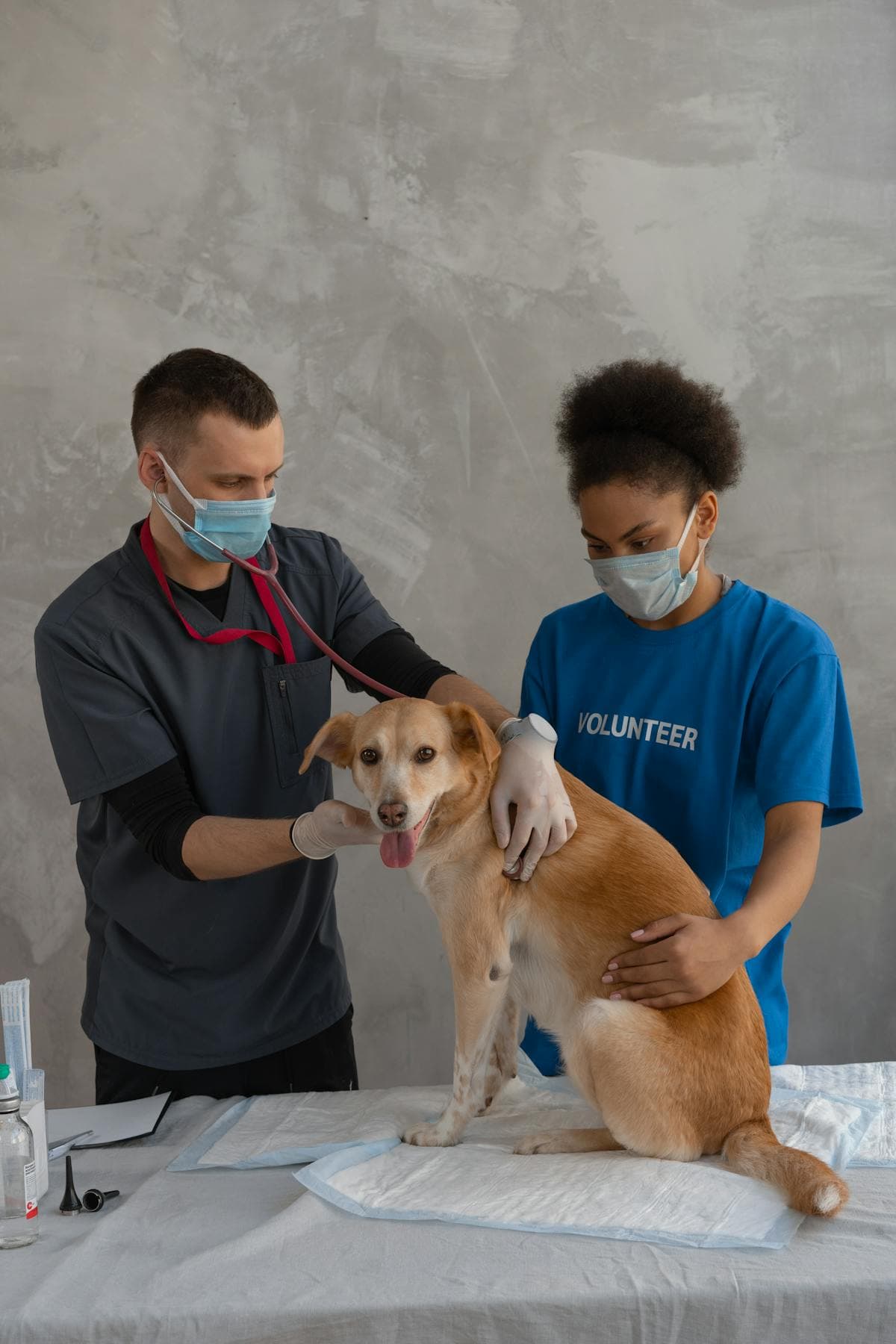
What can Marley's story teach us about saying goodbye?
Marley was, by his owner's account, the worst-behaved dog in the neighbourhood. The yellow Labrador chewed couches, slashed screens and tipped trash cans. He was the only dog John Grogan ever knew "to get expelled from obedience school." He was so big he could eat off the kitchen table with all four paws on the floor (Grogan, 2004).
He also had a gentle heart. When Grogan's wife came home after a miscarriage, Marley "just went perfectly still and put his head in her lap," Grogan later said (ABC News, 2006). When the babies came, he let them pull his ears and his fur.
At 13, Marley was old. His hearing was gone, his teeth were gone, and arthritis in his hips meant he could barely stand. Then he became seriously ill (Wikipedia). Grogan knelt beside him on the floor of the animal hospital and rubbed his grey nose. He had a few minutes alone with him before the vet came back. "I didn't want him to leave this world believing all his bad press," he wrote. So he rested his forehead against Marley's and said: "Marley, you are a great dog."
The next morning, Grogan buried Marley under a wild cherry tree at the edge of the garden. His children tucked drawings in beside him. His wife spoke for all of them: "God, I'm going to miss that big, dumb lug."
Grogan told the story in his Philadelphia Inquirer column on 6 January 2004. Soon his voicemail and email were full, with hundreds of messages. It was more than any column he had ever written had received. The column grew into the book Marley & Me (2005), and then a film with Owen Wilson and Jennifer Aniston (2008) (Wikipedia).
Why did so many strangers write to him? Because almost everyone who loves an animal will kneel where he knelt. This guide walks you through that moment step by step: how to know when it is time, what happens on the day, what it costs, and what research says. Ethics, grief and support have their own page: Pet Euthanasia: Ethics, Grief & Perspectives.
What is pet euthanasia, and how is it different from human euthanasia?
Pet euthanasia is when a veterinarian deliberately ends an animal's life to relieve suffering that cannot be eased in another way. The word comes from Greek: eu (good) and thanatos (death). We use the same word for people, but the practice is very different.
- Who decides. Animals cannot ask to die or say no. The owner and the vet decide together, based on the animal's welfare. In human euthanasia, where it is legal, the patient must ask for it, usually more than once.
- Where it is legal. Pet euthanasia is legal almost everywhere and is a normal part of veterinary work. Human euthanasia is legal in only a small number of countries and is strongly debated. See our legal landscape section.
- How vets see it. Vets see euthanasia as a duty of care: the last medical help they can give when suffering cannot be relieved. The 2016 end-of-life guidelines of the American Animal Hospital Association (AAHA) and the International Association for Animal Hospice and Palliative Care (IAAHPC) say vets should not let a dying animal reach a natural death "without considering the option of euthanasia" (Bishop et al., 2016).
Why do we offer animals a gentle death but argue about it for people? We explore that question on our pet ethics page and in ethics and philosophy.
Common reasons for pet euthanasia:
- Terminal illness, such as cancer, kidney failure or heart failure.
- Severe injury, such as being hit by a car or a broken spine.
- Long-term pain that medicine no longer controls, such as severe arthritis.
- Decline in old age, such as dementia, not being able to stand or eat, or incontinence that causes distress.
- Serious behaviour problems, where an animal is a real danger and other options have failed. This is the most debated reason.
In every case, the core question is the same. Does suffering now outweigh the good things in this animal's life, and can treatment really change that?
How common is euthanasia at the end of a pet's life?
Far more common than most people expect. Most pets that die under veterinary care die by euthanasia, not naturally.
The best evidence comes from VetCompass, a Royal Veterinary College (RVC) programme that studies anonymised records from UK vet practices. In 2021, researcher Camilla Pegram and colleagues looked at a random sample of 29,865 dogs, drawn from 905,544 dogs under UK vet care in 2016. Of the confirmed deaths, 89.3% were by euthanasia. Only 8.3% died without help (Pegram et al., 2021).
Compared with cancer, some problems made euthanasia far more likely. The odds were about 16 times higher for "poor quality of life," 11 times higher for behaviour problems and 6 times higher for spinal cord disease. Older, heavier dogs and some breeds were also more likely to be euthanised. The authors concluded that "a large majority of owners will face euthanasia decisions."
Evidence: strong. This is a large study of real clinical records, not a survey. But it covers UK dogs under vet care. Rates may differ for cats, for other countries, and for animals that never see a vet. An earlier VetCompass study of 5,095 dog deaths found that cancer, joint and muscle problems, and nerve disorders were the most common causes of death (O'Neill et al., 2013).
Cats live a little longer on average. A VetCompass study of 4,009 cat deaths in England found a median age at death of 14 years. The most common recorded causes were injuries (12.2%), kidney disease (12.1%), general illness (11.2%) and cancer (10.8%) (O'Neill et al., 2015).
Shelters are a separate story. In 2025, US shelters and rescues euthanised an estimated 597,000 dogs and cats (320,000 dogs and 277,000 cats). All non-live outcomes, which include euthanasia and animals that died or were lost in care, fell about 1% from 2024 (Shelter Animals Count, 2025). We cover shelters in more depth on the ethics and grief page.
How do I know when it's time to euthanize my pet?
This is the question owners ask most, and no blood test answers it. But there are clear signs, simple tools and good questions to ask.
Why do animals hide pain?
Many animals, and cats in particular, hide pain by instinct. In the wild, looking weak attracts predators. So a pet can be suffering a great deal before you notice. Look for these signs:
- Hiding or withdrawing, especially in cats.
- Refusing food for more than 24 to 48 hours.
- Hard or fast breathing, or heavy panting at rest.
- Not being able to stand, walk or climb to favourite places.
- Loss of bladder or bowel control that distresses the animal.
- Crying, growling or flinching when touched or moved.
- No interest in the family, such as no longer coming to the door.
- Not grooming (cats), or a dull, messy coat.
Science has given vets better ways to read pain. The Feline Grimace Scale scores five changes in a cat's face, such as ear position, tight eyes and whisker position. In a 2019 study, it matched another validated pain tool very closely, and different observers scored cats in the same way (Evangelista et al., 2019). A 2022 systematic review placed the cat and horse grimace scales among those with the highest level of evidence (Evangelista et al., 2022). One limit: the cat scale was built for sudden (acute) pain, not long-term pain.
Is my old dog getting dementia?
Canine cognitive dysfunction is the dog version of dementia. Signs include confusion, getting stuck in corners, pacing at night, forgetting house training, and not recognising family. In an Australian survey of older dogs, researchers estimated that about 14.2% had it. Only 1.9% had been diagnosed by a vet (Salvin et al., 2010). The same team built a 13-question rating scale that owners and vets can use together (Salvin et al., 2011). If your old dog seems "not himself," ask your vet. Some cases can be helped, at least for a while.
Do quality-of-life scales work?
The most widely used tool is the HHHHHMM scale, created by veterinary cancer specialist Dr Alice Villalobos. You score seven areas from 0 to 10: Hurt, Hunger, Hydration, Hygiene, Happiness, Mobility, and More good days than bad. A total above 35 out of 70 suggests an acceptable quality of life. A total that stays below 35 means it is time to talk with your vet about end-of-life care (HHHHHMM scale). You can try a version of it with our free Pet Quality-of-Life Check.
Villalobos built the scale as part of her "Pawspice" approach, which focuses on comfort and symptom control for pets with life-limiting illness (Villalobos, 2011). She was honest about its limits. She wrote that there were "no clinical studies" of quality-of-life assessment at the end of a pet's life (Villalobos, 2011).
Evidence: mixed. A 2015 review of 52 dog quality-of-life tools found that only 11 showed any evidence of being reliable or valid. Most (48) were made for one disease (Belshaw et al., 2015). A later review argued that checks should be regular, look at the whole animal, and be honest about what they do not measure (Belshaw and Yeates, 2018). So treat a score as a way to organise what you see, not as a verdict. Score on several days, not just one. Ask another family member to score too, because people who love a pet can see different things.
Should I keep a diary?
Yes. Many vets suggest marking each day on a calendar as "good" or "bad," based on appetite, comfort, movement and interest in life. When bad days start to outnumber good days, or good days stop coming, it is usually time for the conversation. A written record also helps your vet, because it shows a pattern, not just one bad morning.
Think of it like the weather. One stormy day does not mean winter has come. But when storms come week after week, the season has changed.
How do I make the decision, and who should be involved?
You do not have to decide alone. Your vet, your family and the tools above can all help. Research also shows that this decision weighs heavily on owners, and that this is normal.
What does research say about owners?
- Caring for a sick pet is hard on people. A study compared 119 owners of dogs or cats with long-term or terminal illness with 119 owners of healthy pets. The first group had more caregiver burden, more stress, more symptoms of depression and anxiety, and lower quality of life (Spitznagel et al., 2017).
- The strain comes in different forms. A later study of 393 owners found that caregiver burden, anticipatory grief (grieving before a death happens) and quality of life are separate experiences. Owners fell into four groups, including "distressed" and "resilient," and these groups thought about euthanasia differently (Spitznagel et al., 2021).
- Owners want a vet who knows them. In interviews with 14 New Zealand cat owners, owners valued vets who understood their bond with the cat, who could see what owners missed, and who told them they were doing the right thing. Many badly wanted to know how long their cat had left (Littlewood et al., 2021).
- "Whether" and "when" are the hardest parts. In a 2026 study, 143 caregivers described their pets' last days. They spoke of distress about timing, family views, money, access to specialist care and their own exhaustion. They also spoke of guilt, regret and meaning. What helped most were vets who were kind, honest and planned ahead (Kogan et al., 2026).
Evidence: early to mixed. These are mostly surveys and interviews. They show what owners feel, not what causes better outcomes. But they point the same way: early, honest talks help.
What should I ask my vet?
- What is the diagnosis, and what is likely to happen next?
- Are there treatments left? What would they realistically achieve, and what would they cost my pet in stress or pain?
- Is my pet in pain now? Can we control it?
- How will I know when things are getting worse?
- What would you do if this were your pet?
- Can we make a plan now, before an emergency?
A good vet will answer honestly and will not push you either way. Many vets help owners with one simple question: "Are we keeping this pet alive for the pet, or for ourselves?"
Is it better to be too early or too late?
There is a well-known saying among vets: "Better a week too early than a day too late." It means it is kinder to spare an animal its worst days than to wait until the very end. Many owners who waited longer later regret that their pet suffered.
Vets have a word for a death with too much suffering: dysthanasia, a "bad death." Veterinary ethicists Kathleen Cooney and Barry Kipperman argue that both needless euthanasia and dysthanasia harm animals. They also say vets should treat a request for euthanasia as a request they can sometimes turn down, not an order (Cooney and Kipperman, 2023).
If you are wondering whether it is time, it is at least time to have the conversation. Talking about euthanasia does not commit you to it.
How do I involve children?
Include everyone in the family who will be affected. For children, honesty in simple words works best. KidsHealth, a children's health service whose pages are reviewed by doctors, warns against saying the pet "went to sleep" or "got put to sleep." Young children take words literally, and this can make them afraid of sleep or of operations (KidsHealth).
Instead, explain that the pet is very sick, that the vets have done everything they can, and that the vet can help the pet die peacefully without hurting. Use the words "die" and "death." Many children want to say goodbye first. KidsHealth notes that some may be old or mature enough to be there and comfort the pet. Others may prefer to help with a memorial afterwards, as Grogan's children did with their drawings.
Should euthanasia happen at home or at the clinic?
Both are good choices. The right one depends on your pet, your family, your budget and what is available near you.
| At the clinic | At home | |
|---|---|---|
| Comfort for the pet | Car ride and clinic smells can stress some animals | Favourite bed, sofa or garden; no travel |
| Privacy | Often a quiet room set aside, but still a clinic | Full privacy for family and other pets |
| Cost (US, 2025) | Lower: about $139 dog, $158 cat on average | Higher: about $410 dog, $359 cat on average |
| Timing | Often easier to book quickly | May need booking ahead; limited in rural areas |
| Support on hand | Staff and equipment nearby | Usually one vet, sometimes with an assistant |
Costs are national averages from research done in 2025 for CareCredit (dog, cat).
In-home end-of-life care has grown fast. Lap of Love began in 2009, when Dr Dani McVety started a home hospice service in Tampa, Florida. Her classmate Dr Mary Gardner joined as co-founder in 2010. It is now the largest US network of vets who focus only on end-of-life care, with over 300 doctors (Lap of Love). In the US, home visits became legally clearer in 2014. The Veterinary Medicine Mobility Act confirmed that vets do not need a separate registration to carry controlled medicines outside their main clinic, such as to homes and farms (Wikipedia).
What do vets think? In a 2023 survey of 249 vets who perform euthanasia of cats and dogs, vets felt that home euthanasia "offers several benefits" when it is available and suitable (Kogan and Cooney, 2023). For a fuller guide, read Pet Euthanasia at Home: What Happens, What It Costs, How to Prepare.
What happens during a pet euthanasia appointment?
Knowing what will happen can make the day less frightening, for you and for your pet. Here is what usually happens. Your vet may do things a little differently.
What happens before it begins?
- Paperwork and payment. Many clinics ask you to sign a consent form and pay beforehand, so you do not have to deal with money afterwards. This matters more than it sounds. In a survey of 2,354 pet owners by researchers at the University of Guelph in Canada, how payment and paperwork were handled was linked to how satisfied owners felt later (Matte et al., 2020).
- Aftercare choices. You will be asked what you want to happen to your pet's body. You can decide this ahead of time. See the aftercare section below.
- Time together. Ask for time alone with your pet before anything starts, just as Grogan had his few minutes with Marley. Some owners bring a favourite blanket or treats, if the vet agrees.
What are the two stages?
Most vets work in two stages:
- First, deep sleep. The vet gives a sedative. Your pet becomes drowsy and then falls into a deep, comfortable sleep. They are no longer aware of what is happening around them.
- Then, the final step. Only when your pet is deeply asleep does the vet carry out the final step. Your pet dies quietly. The vet then listens to confirm that your pet has died.
Ask your vet to explain each step before you begin, and to tell you when each stage is happening.
Sedation first is widely seen as best practice. In the 2023 US survey, vets said they "appreciate the use of sedatives before euthanasia" (Kogan and Cooney, 2023). But practice varies. In a 2023 survey of 361 New Zealand vets, only 32.9% always sedated dogs first and 47.1% always sedated cats first. Fewer than half said their clinic had a standard protocol (Gates et al., 2023). Training is part of the reason. In the US survey, very few vets felt vet school had prepared them well for euthanasia. So it is fair to ask: "Will my pet be sedated first?"
What might I see afterwards?
After your pet has died, the body can still move. This can upset you if you do not expect it (Lap of Love):
- Muscle twitches or small jerks.
- One or a few sharp breaths. This is an involuntary reflex, not conscious breathing.
- Release of the bladder or bowels as muscles relax.
- Eyes that stay open.
These are reflexes. They do not mean your pet is in pain or aware. Your pet has already gone. A good vet will tell you about them beforehand.
How long does it take?
The whole visit often takes 15 to 30 minutes, including preparation and sedation. Many vets allow extra time before and after. There is no rush. You can stay with your pet's body for as long as you need.
Should I stay in the room?
This is your choice, and both choices can be loving. Some people stay to the very end. Some say goodbye before the sedation and wait outside. Some come back to sit with their pet afterwards.
Here is what we know:
- Most vets are comfortable with you there. In the 2023 US survey, 57% of vets preferred owners to be present and 38% had no preference (Kogan and Cooney, 2023).
- Emotional support shapes your grief. In the survey of 2,354 owners, the emotional support owners received was linked to both their satisfaction and their grief afterwards (Matte et al., 2020).
- Some owners who leave later wish they had stayed. Vets often hear this. Those who stay usually say it was painful, but that they are glad they were there.
Evidence: early. Many vets believe pets are calmer with their owner nearby. That fits what we know about the bond between people and animals, but it has not been well tested. If you feel you cannot stay, that is all right. Your pet will be cared for. If you can stay, your voice and touch may be the last familiar things your pet knows, as Grogan's forehead against Marley's was.
How much does pet euthanasia cost?
Prices depend on where you live, your pet's size, the time of day and the options you choose. These are US national averages from research done in 2025 for CareCredit (dog, cat):
| Service | Dog: average (range) | Cat: average (range) |
|---|---|---|
| Euthanasia at a clinic | $139 ($110–$253) | $158 ($125–$286) |
| Euthanasia at home | $410 ($325–$747) | $359 ($284–$653) |
| Private cremation | $260 ($206–$473) | $180 ($142–$326) |
| Pet cemetery burial | $831 ($659–$1,513) | $566 ($449–$1,031) |
State averages vary widely. A clinic visit for a dog averages about $111 in Mississippi and $249 in Hawaii.
Things that can raise the price:
- Larger animals, because they need more medicine and handling time.
- Evenings, weekends, holidays and same-day requests.
- Emergency clinics, which usually cost more than your regular vet.
- Travel distance for home visits. Our guide to pet euthanasia at home explains what a home visit includes and how to find a home vet.
- Keepsakes such as paw prints, special urns or jewellery.
Ask whether sedation is included in the price. If money is a worry, tell your vet early. Some clinics offer payment plans, and some charities and shelters help with end-of-life costs. In the UK, the vet regulator tells vets to point owners who cannot pay towards charity help. It also says that being unable to pay should not stop an animal getting first aid and pain relief, which may include euthanasia (RCVS supporting guidance).
What happens to my pet's body afterwards?
This is called aftercare. You can decide ahead of time, which makes the day easier.
- Communal cremation. Your pet is cremated with other animals. The ashes are not returned. This is usually the cheapest option.
- Private (individual) cremation. Your pet is cremated alone, and the ashes come back to you in an urn or box. The cost goes up with your pet's weight.
- Home burial. This is allowed in many places, but check local rules first. Some areas ban it or set rules on depth and distance from water.
- Pet cemetery. A formal plot with a marker. Costs vary widely.
An important warning about home burial. The medicine used in euthanasia stays in the body. Animals that eat from the remains can be poisoned. Bald eagles and other scavengers have died this way in the US. The US Fish and Wildlife Service says these poisonings "almost always are the result of improper disposal and are preventable." It calls cremation the preferred choice where available, and notes that most rules require at least three to four feet of soil on top (US Fish and Wildlife Service). This matters even more for large animals such as horses. Ask your vet what is allowed and safe where you live.
Who handles the arrangements is changing too. In a 2024 survey of 772 vet professionals, 21% used a model where owners deal directly with the aftercare company instead of through the clinic. The main benefit they named was fewer mistakes, such as misspelled names or forgotten memorial requests (Cooney and Kogan, 2025). Whatever the system, double-check your pet's name and your choices before you leave.
Ways to remember your pet:
- Clay or ink paw prints, which many vets offer on the day.
- A clipping of fur or a few whiskers.
- An urn made of wood, ceramic or a material that breaks down in soil.
- Memorial jewellery that holds a little ash or fur.
- A tree or garden planted in your pet's honour.
- A photo book, portrait or letter to your pet.
Grogan's family chose a wild cherry tree and their children's drawings. There is no right way, only your way.
What about horses, exotic pets, emergencies and shelters?
How is horse euthanasia different?
Horse euthanasia needs extra planning because of the animal's size. The vet will choose a safe place, and moving the body afterwards needs planning too. The wildlife risks above apply. The American Association of Equine Practitioners (AAEP) revised its euthanasia guidelines in 2026. They say a horse should not have to endure "continuous or unmanageable pain from a condition that is chronic and incurable" (AAEP, 2026). They also note that an insurance policy is a contract between the owner and the insurer. So the horse's insurance status should be clear before euthanasia. If your horse is insured, read your policy early, before any crisis.
For farm animals, decisions also weigh money, animal welfare and the farm's needs, and are often guided by the vet and farming rules.
What about exotic pets?
Birds, reptiles, rabbits, guinea pigs, ferrets, hamsters and fish each need special care. Vets often give a general anaesthetic first, so the animal is fully unconscious. Reptiles have unusual bodies, so the vet may take extra time to confirm death. Not every general vet has experience with these species, so find a vet who treats exotic animals before you need one.
What if it is an emergency?
Sometimes there is no time to plan: a road accident, a sudden collapse or a serious spinal injury. Then euthanasia may be the kindest immediate choice. It usually costs more and feels less personal. It can also be harder on owners afterwards. In the University of Guelph survey, whether the euthanasia was an emergency was one of the factors linked to owners' grief (Matte et al., 2020). Save the number of your nearest 24-hour emergency vet now. If your pet has a serious illness, ask your vet for an emergency plan.
What about shelters?
Shelter euthanasia happens on a much larger scale, for reasons such as untreatable illness, serious aggression and lack of space. The emotional cost for shelter workers is heavy. We cover shelters, the "no-kill" movement and staff wellbeing on the ethics and grief page.
What does the law say about pet euthanasia?
Laws differ between countries and states, but some principles are common. The examples below are mostly from the UK and US.
Who can carry it out?
The medicines used for pet euthanasia are controlled substances. In most countries, only vets (or trained staff under their supervision) can obtain and use them, under strict rules. Some places allow certified shelter workers to do it after special training. The law itself can be broader. In the UK, the veterinary regulator (the Royal College of Veterinary Surgeons, RCVS) notes that euthanasia "is not, in law, an act of veterinary surgery," and may be carried out by anyone if it is done humanely (RCVS, chapter 8). In practice, for a companion animal, a vet is the right person.
Does the owner have to consent?
Owners must give informed consent in almost all cases. Even when a vet strongly advises euthanasia, the owner makes the final decision. There are narrow exceptions. UK guidance allows a vet to act without consent when an animal "should, in its own interests, be destroyed without delay." The vet should record all the reasons and, generally, have a second vet agree (RCVS, chapter 8).
Can a vet say no?
Yes, for a healthy animal. The RCVS states: "No veterinary surgeon is obliged to kill a healthy animal," unless the law requires it as part of their job. A vet who objects on conscience should "make sympathetic efforts to direct the client to another veterinary surgeon." UK vets presented with a healthy dog or cat for euthanasia should also scan for a microchip and check the database first. Someone else, such as a rescue shelter or a person on the database, may want to care for the animal. This rule began for dogs in 2021 and was extended to cats in 2024 (RCVS supporting guidance; RCVS, 2024).
Can letting an animal suffer be a crime?
Yes. The law works in both directions. Killing an animal cruelly or without need can be a crime. But leaving an animal to suffer can also be an offence. In England and Wales, the Animal Welfare Act 2006 makes it an offence to cause an animal unnecessary suffering, by an act or by "a failure... to act" (Animal Welfare Act 2006, s.4). Many US states have similar rules. If an owner refuses advice and an animal suffers, UK vets may arrange a second opinion or, in serious cases, report it to the RSPCA (RCVS, chapter 8).
When can the law order euthanasia?
Courts or authorities can order euthanasia in some cases, without the owner's consent. Examples include destruction orders for dangerous dogs after serious attacks, some notifiable diseases such as suspected rabies, and some animal cruelty cases.
What professional guidelines do vets follow?
In the US, the main reference is the AVMA Guidelines for the Euthanasia of Animals. The current edition, from 2020, is 121 pages long. It covers companion animals, farm animals, horses, birds, fish and wild animals. The guidelines were first published in 1963 and last updated before that in 2013 (dvm360, 2020; AVMA). They rate approaches as acceptable, acceptable with conditions, or unacceptable. State veterinary boards enforce standards of practice, and vets who break them can be disciplined.
How do I find the right vet for end-of-life care?
Not every practice approaches euthanasia with the same care. It is worth finding the right vet before you need one.
Questions to ask:
- Will my pet be sedated first?
- Can I stay with my pet the whole time?
- Can I have time alone with my pet before and after?
- Do you offer home euthanasia, or can you refer me to someone who does?
- How do you handle aftercare and keepsakes?
- What might I see and hear, so I am not surprised?
- Can we pay and sign forms beforehand?
Where to look:
- Hospice-trained vets. The IAAHPC certifies vets, vet technicians and advocates in animal hospice and palliative care (for vets, the CHPV credential). Its website has a "Find Support" section for pet owners (IAAHPC). Animal hospice works like palliative care for people: it focuses on comfort, not cure.
- Fear Free certified professionals. The Fear Free programme trains vet teams to reduce fear, anxiety and stress in animals, with quiet rooms, soft bedding and gentle handling.
- In-home services. Home euthanasia networks such as Lap of Love, and many local mobile vets, offer visits at home.
Build the relationship early. The worst time to find a vet is in the middle of a crisis. If your pet has a long-term or terminal illness, meet a hospice vet or home service while there is still time. Talk about your pet's condition, your wishes and your fears. Write down a plan: who will come, where it will happen, and what aftercare you want. A plan lets you focus on your pet, not on phone calls, when the day comes.
Remember your vet team is human. Euthanasia is hard for vets too. In the New Zealand survey, vets said that giving animals and owners a good experience helped them cope with compassion fatigue (Gates et al., 2023). A simple thank-you matters.
What happens to me, and my other pets, afterwards?
The decision does not end when the appointment does. Research shows that losing a pet is a real loss.
- Grief and stress are measurable. An Israeli study compared 103 women who had recently lost a dog through euthanasia with 110 women who still had their dog. The bereaved group had higher stress and lower quality of life in physical, psychological and relationship areas. More social support went with better quality of life (Tzivian et al., 2015).
- Many people grieve alone. In a US survey of 340 owners who had euthanised a pet, 74.7% said they mourned privately. Only 0.9% went to a support group (Park and Royal, 2020). Support exists, but few people use it.
- Other pets may grieve too. In a 2022 Italian study of 426 owners whose dog had died while another dog lived on, about 87% saw changes in the surviving dog. The most common were more attention seeking (67%), playing less (57%) and being less active (46%). For about a quarter of these dogs, changes lasted more than six months. Whether the surviving dog had seen the body made no difference to how long the changes lasted (Uccheddu et al., 2022). So letting other pets see the body is your choice. Keeping their routines steady may help.
Evidence: mixed. These studies rely on surveys and owner reports, and some samples are small or narrow. But together they show that pet loss deserves to be taken seriously.
Guilt is very common after euthanasia. Many owners worry they acted too early or too late. Our guide to grief after euthanasia explains why guilt and relief can arrive together. Choosing to end an animal's suffering is an act of care. If your grief stays heavy for months, or you feel unable to cope, please talk to someone. Our pet ethics, grief and support page lists pet loss hotlines, support groups and counselling. If you ever have thoughts of ending your own life, please reach out now. Our help page lists crisis lines you can call or text today.
What would Marley's family want you to know?
When John Grogan sat down to write about Marley, he did not write about a perfect dog. He wrote about a dog who chewed couches, crashed through screens and was thrown out of obedience school. He wrote about a dog who sat still with a grieving woman and let babies pull his fur. Then he wrote about the end, honestly. Hundreds of readers wrote back. He had put words to something most of them had felt and few had said.
More than a century ago, Rudyard Kipling wrote a poem about this same feeling. "The Power of the Dog" ends its first verse with a warning every pet owner understands (Poets.org):
"Brothers and Sisters, I bid you beware / Of giving your heart to a dog to tear."
Kipling did not mean "do not love." He meant that the price of loving an animal is that one day you will have to say goodbye. Euthanasia, done well, lets that goodbye be gentle: no fear, no pain, and a familiar voice at the end, saying, in one way or another, you are a great dog.
If you are facing this decision, or know you will one day, it may help to ask yourself a few quiet questions:
- What does a good day look like for my pet? How many of those are left?
- Am I waiting for my pet's sake, or for my own?
- Where would my pet feel safest at the end: at home, or with the vet team they know?
- Who in my family needs to be part of this, and have I talked with them?
- What would I want to say, so that no words are left unsaid?
There is no perfect moment. But with good information, a caring vet and a plan, you can make a choice that is kind to your pet, and one you can live with.
Sources
- John Grogan. Saying farewell to a faithful pal. The Philadelphia Inquirer, 6 January 2004 (republished 2008)
- Wikipedia: Marley & Me (book and film)
- ABC News: 'Marley & Me' author talks about spirited dog (2006)
- Rudyard Kipling. The Power of the Dog (Poets.org)
- Pegram et al. Proportion and risk factors for death by euthanasia in dogs in the UK. Scientific Reports 2021
- O'Neill et al. Longevity and mortality of owned dogs in England. Veterinary Journal 2013
- O'Neill et al. Longevity and mortality of cats attending primary care veterinary practices in England. J Feline Med Surg 2015
- Bishop et al. 2016 AAHA/IAAHPC End-of-Life Care Guidelines. J Am Anim Hosp Assoc 2016
- Villalobos. Quality-of-life assessment techniques for veterinarians. Vet Clin North Am Small Anim Pract 2011
- Villalobos. Assessment and treatment of nonpain conditions in life-limiting disease (Pawspice). Vet Clin North Am Small Anim Pract 2011
- Quality of Life Scale (the HHHHHMM Scale), adapted from Villalobos
- Belshaw et al. Quality of life assessment in domestic dogs: an evidence-based rapid review. Veterinary Journal 2015
- Belshaw and Yeates. Assessment of quality of life and chronic pain in dogs. Veterinary Journal 2018
- Evangelista et al. Facial expressions of pain in cats: the development and validation of a Feline Grimace Scale. Scientific Reports 2019
- Evangelista et al. Measurement properties of grimace scales for pain assessment in nonhuman mammals: a systematic review. Pain 2022
- Salvin et al. Under diagnosis of canine cognitive dysfunction: a cross-sectional survey of older companion dogs. Veterinary Journal 2010
- Salvin et al. The canine cognitive dysfunction rating scale (CCDR). Veterinary Journal 2011
- Spitznagel et al. Caregiver burden in owners of a sick companion animal: a cross-sectional observational study. Veterinary Record 2017
- Spitznagel et al. Owner quality of life, caregiver burden and anticipatory grief: how they differ, why it matters. Veterinary Record 2021
- Littlewood et al. 'What would you do?': How cat owners make end-of-life decisions. Animals 2021
- Kogan et al. End-of-life decision-making experiences of companion animal caregivers. Animals 2026
- Cooney and Kipperman. Ethical and practical considerations associated with companion animal euthanasia. Animals 2023
- Kogan and Cooney. Defining a 'good death': exploring veterinarians' perceptions of companion animal euthanasia. Animals 2023
- Gates et al. Euthanasia of dogs and cats by veterinarians in New Zealand: protocols, procedures and experiences. N Z Vet J 2023
- Matte et al. Exploring pet owners' experiences and self-reported satisfaction and grief following companion animal euthanasia. Veterinary Record 2020
- Tzivian et al. Associations between stress and quality of life: owners keeping a living dog or losing a dog by euthanasia. PLoS One 2015
- Park and Royal. A national survey of companion animal owners' self-reported methods of coping following euthanasia. Veterinary Sciences 2020
- Uccheddu et al. Domestic dogs (Canis familiaris) grieve over the loss of a conspecific. Scientific Reports 2022
- Cooney and Kogan. Pet aftercare ordering models. Topics in Companion Animal Medicine 2025
- KidsHealth (Nemours): When a pet dies: helping kids cope
- Lap of Love: Will my pet feel pain or distress during euthanasia?
- Lap of Love: Who we are
- CareCredit: How much does it cost to euthanize a dog? (2025 cost data)
- CareCredit: Cat euthanasia, options and costs (2025 cost data)
- US Fish and Wildlife Service: Help prevent euthanasia drugs from killing bald eagles and other wildlife
- dvm360: AVMA releases new pet euthanasia guidelines (2020 edition)
- AVMA: Guidelines for the euthanasia of animals (2020 edition, current)
- AAEP: Euthanasia Guidelines (revised 2026)
- Shelter Animals Count: 2025 Annual Data Report
- RCVS Supporting guidance: 8. Euthanasia of animals
- RCVS: 2024, your year in Code and supporting guidance changes (microchip scanning before euthanasia)
- Animal Welfare Act 2006, section 4: Unnecessary suffering (legislation.gov.uk)
- Wikipedia: Veterinary Medicine Mobility Act of 2014
- International Association for Animal Hospice and Palliative Care (IAAHPC)
Frequently Asked Questions
Is pet euthanasia painful for the animal?
How do I know when it's time to euthanize my pet?
How common is euthanasia when a pet dies?
Should I stay with my pet during euthanasia?
How much does pet euthanasia cost?
Is home euthanasia better than going to the clinic?
Can I bury my pet at home after euthanasia?
Can a vet refuse to euthanize my pet?
Related Topics
Pet Euthanasia Ethics and Grief: Guilt, Faith and Support
The ethics of putting a pet to sleep, what faiths and research say, why pet grief and guilt are real, and how families, children and vets can cope.
Section 05Medical Views on Euthanasia: What Doctors and Nurses Think
What doctors, nurses and medical bodies think about euthanasia and assisted dying in 2026, their role where it is legal, and what the research shows.
Section 04Euthanasia Ethics: The Key Arguments, Evidence and Thinkers
The ethics of euthanasia in plain English: autonomy, sanctity of life, killing vs letting die, double effect, slippery slope evidence, religion and law.